
5-Inch vs 6-Inch Gutters: Choosing the Right Size in Southern Utah
Our desert gets barely eight inches of rain a year — but when a monsoon cell parks over your roof, gutter size is the difference between controlled drainage and a waterfall over your front door.
Gutter sizing charts are usually written for places with forty inches of annual rain, so homeowners here reasonably ask: does size even matter in a desert? It does — because gutters are sized for the worst ten minutes of the year, not the annual total. St. George averages roughly eight inches of rain, and a big share of it arrives in a handful of July and August monsoon bursts that turn washes into rivers. Your gutters either keep up with that peak flow or they overflow at the corners, dump water against your stucco and foundation, and carve trenches in your landscaping rock.
The right size comes down to three things: how much roof drains into each gutter run, how steep that roof is, and how fast the rain comes down. Here is how the two standard seamless sizes compare, and which Southern Utah homes actually need the bigger one.
5-Inch vs 6-Inch: What Actually Changes
5-Inch Gutters
The residential standard
- The most common seamless K-style size on Washington County homes
- Handles typical roof planes on single-story stucco ranches comfortably
- Pairs with standard 2x3-inch downspouts
- Lower material cost, and a cleaner, slimmer profile on smaller fascia
6-Inch Gutters
The high-capacity option
- Carries roughly 40% more water than a 5-inch gutter
- Built for large roof planes, steep pitches, and two-story homes
- Pairs with larger 3x4-inch downspouts that clog far less often
- The safer choice where a monsoon cell dumps a lot of water fast
Both sizes are fabricated on-site as continuous seamless runs — the size changes, the no-leak construction does not.
Which Size Does Your Home Need?
A quick reference for the homes we see most often across Washington County.
Single-story stucco ranch (most of St. George and Washington)
5-inch is usually plenty
Moderate roof planes drain into multiple downspouts, so standard capacity keeps up even in a summer storm.
Two-story or large custom home (Washington Fields, Little Valley, Desert Color)
Consider 6-inch
Big uninterrupted roof planes concentrate a lot of water into each run. Extra capacity prevents overflow at the corners.
Tile or metal roof
Lean 6-inch
Smooth, steep surfaces shed water in a fast sheet during a downpour. Wider gutters catch the overshoot that a 5-inch trough can miss.
Homes under mature trees (Santa Clara, older St. George neighborhoods)
6-inch downspouts earn their keep
The larger 3x4-inch downspouts that come with 6-inch systems pass leaves and debris instead of clogging.
Where the home sits matters as much as how the roof is shaped. On the tree-shaded streets in Santa Clara, debris drives the decision more often than volume does, which is why the larger downspouts on a 6-inch system pair so well with gutter guards and scheduled gutter cleaning. On the large-roof builds filling in around St. George and Washington, capacity is the real constraint and 6-inch starts to earn its cost.
Why Monsoon Season Changes the Math
A Southern Utah monsoon storm doesn't drizzle. A cell builds over Pine Valley or the Arizona Strip, drifts over town, and drops a month's worth of rain in under an hour — sometimes as a microburst that hits one neighborhood and misses the next. That intensity is what gutter sizing is really about:
- Peak flow, not total volume, overwhelms gutters. A gutter that handles a week of steady Seattle rain can still overflow in ten minutes of St. George monsoon.
- Steep tile and metal roofs accelerate runoff, so water can jump a narrow trough entirely — wider 6-inch gutters catch the overshoot.
- Overflow lands where it hurts: against stucco that stains, foundations on expansive soil, and decorative rock that washes into the street.
- Bigger 3x4-inch downspouts also move debris through instead of jamming — useful when a storm strips leaves and grit off the roof all at once.
Is 6-Inch Worth the Extra Cost?
Six-inch gutters use more aluminum and larger downspouts, so they cost more per foot than 5-inch — there's no way around that. For a typical single-story home with healthy roof breaks, that extra spend usually isn't necessary; a properly pitched 5-inch system with well-placed downspouts does the job. Where 6-inch earns its price is on large or steep roofs where undersized gutters mean overflow every single storm season. Upsizing later means replacing the whole run, so it's worth getting the call right the first time.
The honest answer for your specific house takes a tape measure, not a chart. During a free on-site estimate we measure your roof planes, count the downspout drops, and recommend the size your home actually needs — and if that's the cheaper one, that's what we'll tell you.
Already planning the look? Our gutter color guide covers finishes for both sizes, our seamless gutters page explains how on-site fabrication works, and our gutter installation page walks through the process from site assessment to final inspection.
Sizing Factors Unique to Southern Utah
Burst-Style Rainfall
Nearly all of our meaningful rain falls in short, violent monsoon events — so we size for intensity, not the modest annual total.
Tile Roofs & Big Planes
Newer builds trend toward large, steep, fast-shedding roofs — exactly the combination that pushes a home from 5-inch into 6-inch territory.
Expansive Desert Soil
Uncontrolled roof runoff soaks the clay-heavy soil at your foundation. Correctly sized gutters and downspouts move that water where it belongs.
Related Services
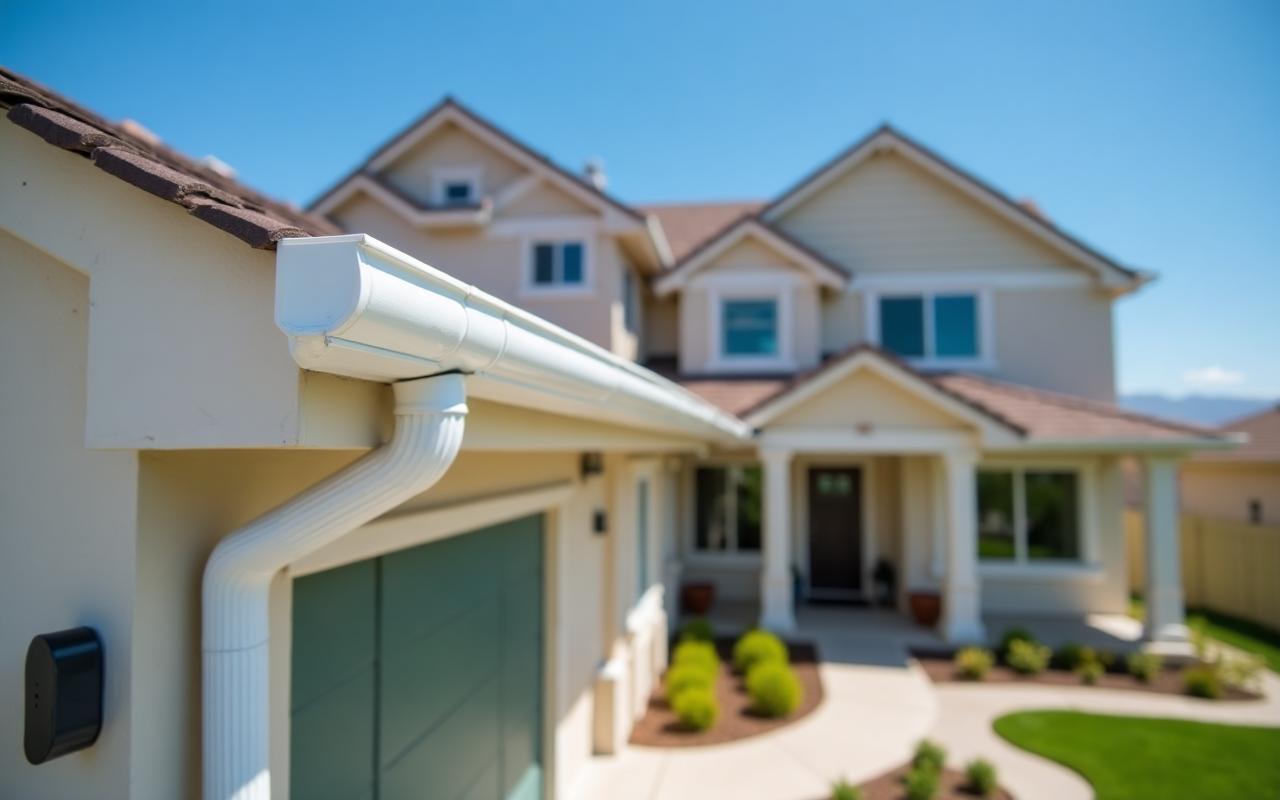
Seamless Gutters
Custom-fabricated aluminum gutters designed for perfect fit and long-lasting performance.
Learn more about Seamless Gutters
Gutter Installation
Complete gutter system installation for new construction and homes without gutters.
Learn more about Gutter Installation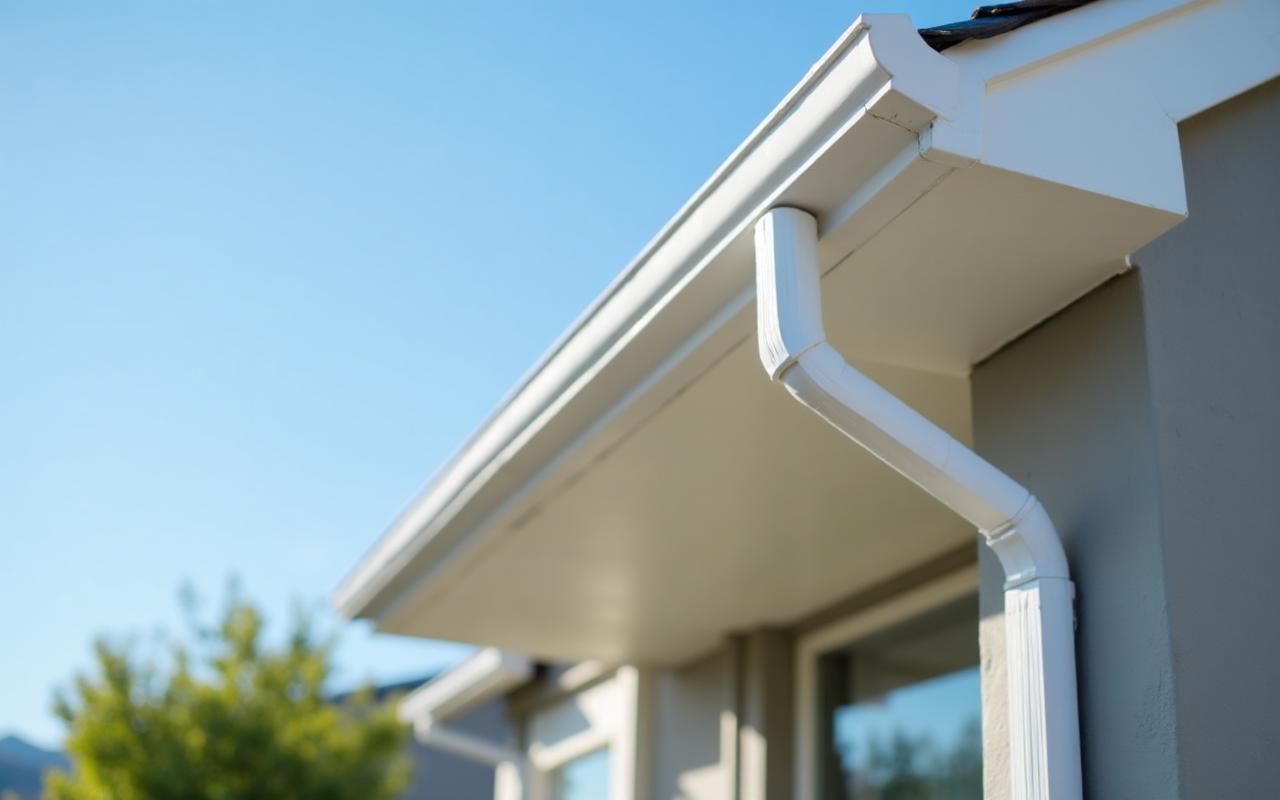
Gutter Replacement
Replace old, failing systems with modern seamless gutters for better protection.
Learn more about Gutter ReplacementGet a Size Recommendation for Your Roof
Schedule a free on-site estimate and we'll measure your roof planes, check your downspout drops, and tell you exactly which size your home needs — before monsoon season tests it.